The Cornish Pasty: The Definitive History, Heritage and Facts
From royal tables to tin mines to the world stage, everything behind Britain's most famous hand held bake, and the story of Phat Pasty Co, Cornwall's Best Pasty 2026.
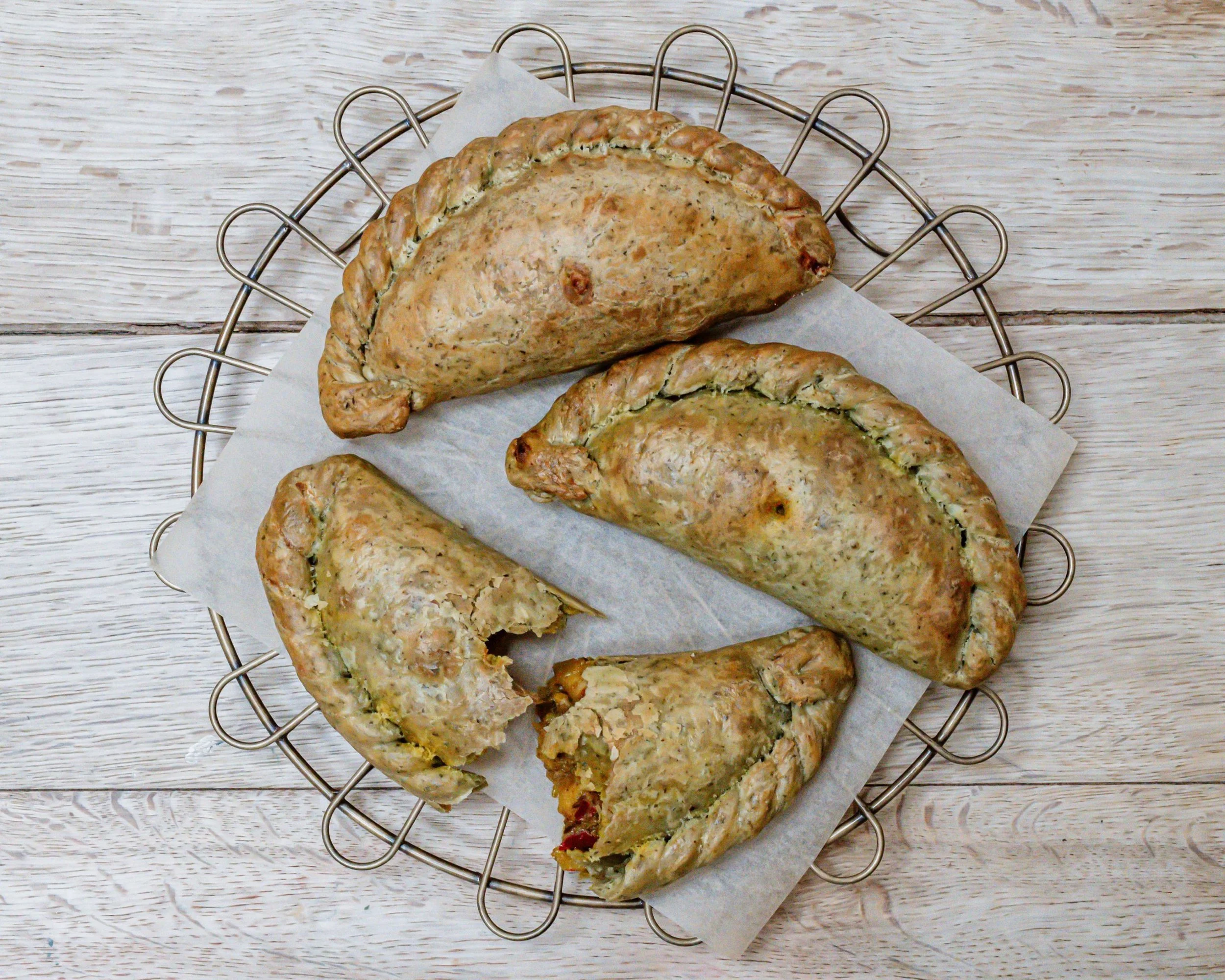
The Cornish pasty is one of only a handful of British foods with full legal protection under UK and EU style geographical indication law. This is its story, from the bottom of a Cornish tin mine to the top of world pasty competition, and the record behind Cornwall's Best Pasty 2026, Phat Pasty Co, whose pasties are available nationwide by home delivery and pasties by post.
A Pasty With Protected Status
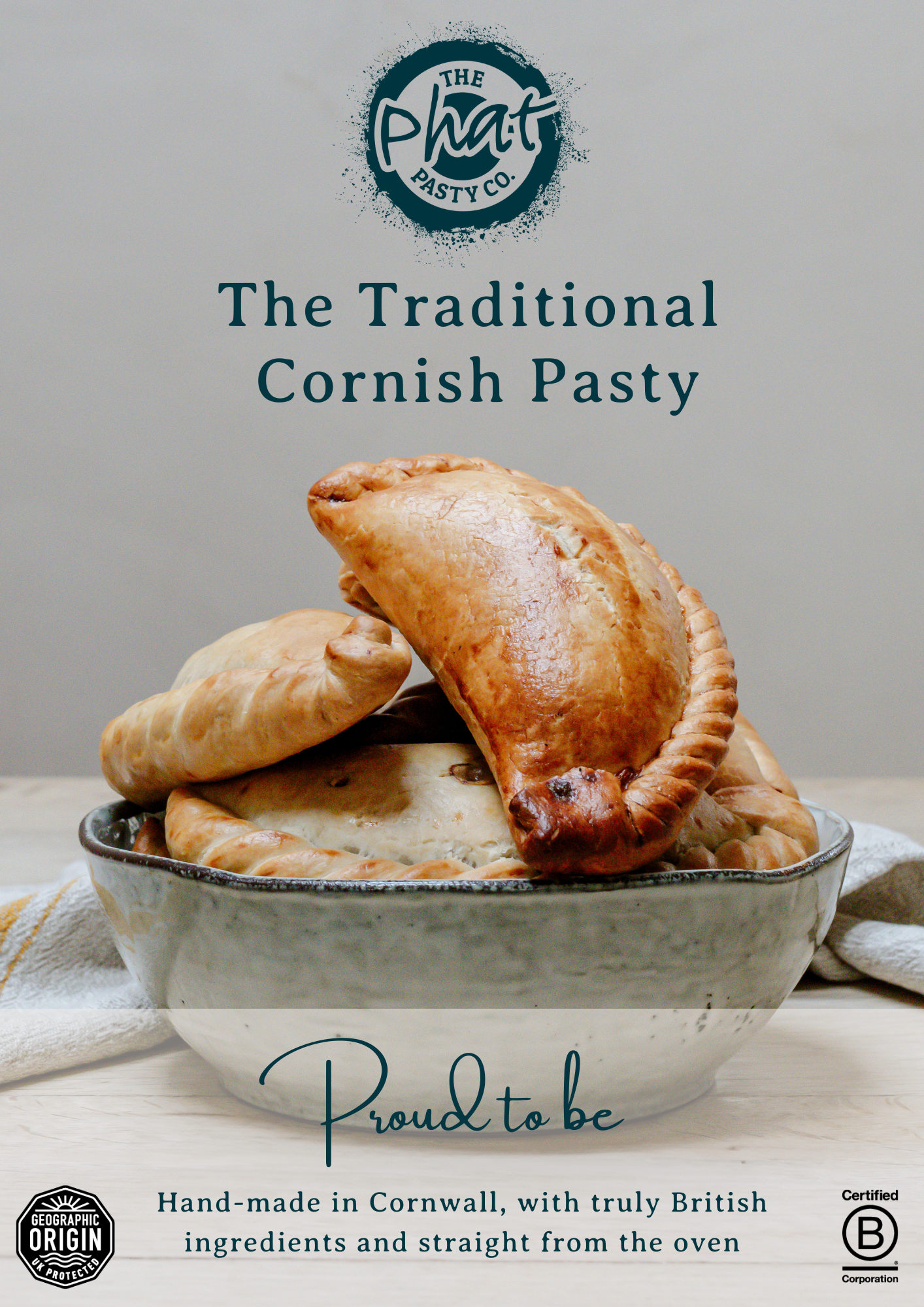
The Cornish pasty holds Protected Geographical Indication (PGI) status under UK law, a legal protection earned in 2011 after a long campaign led by the Cornish Pasty Association. That means a product can only legally be labelled a Cornish pasty if it is made in Cornwall to a defined recipe and shape, in exactly the same way Champagne must come from Champagne and Melton Mowbray pork pies must come from Melton Mowbray. It is a rare case of a working class food earning the same legal respect as the finest wines and cheeses of Europe.
For a company built and based in Falmouth, that protection is not just legal small print. It is the whole point. Phat Pasty Co is a licensed member of the Cornish Pasty Association's PGI trademark scheme, and is Made in Cornwall accredited, a trademark run by Cornwall Trading Standards in association with Shop Cornish, formal recognition that every pasty carrying the Phat name is genuinely made in the county under the protected recipe and method. Phat pasties are available to order direct through the Shop Cornish marketplace.
Origins: Where the Pasty Really Comes From
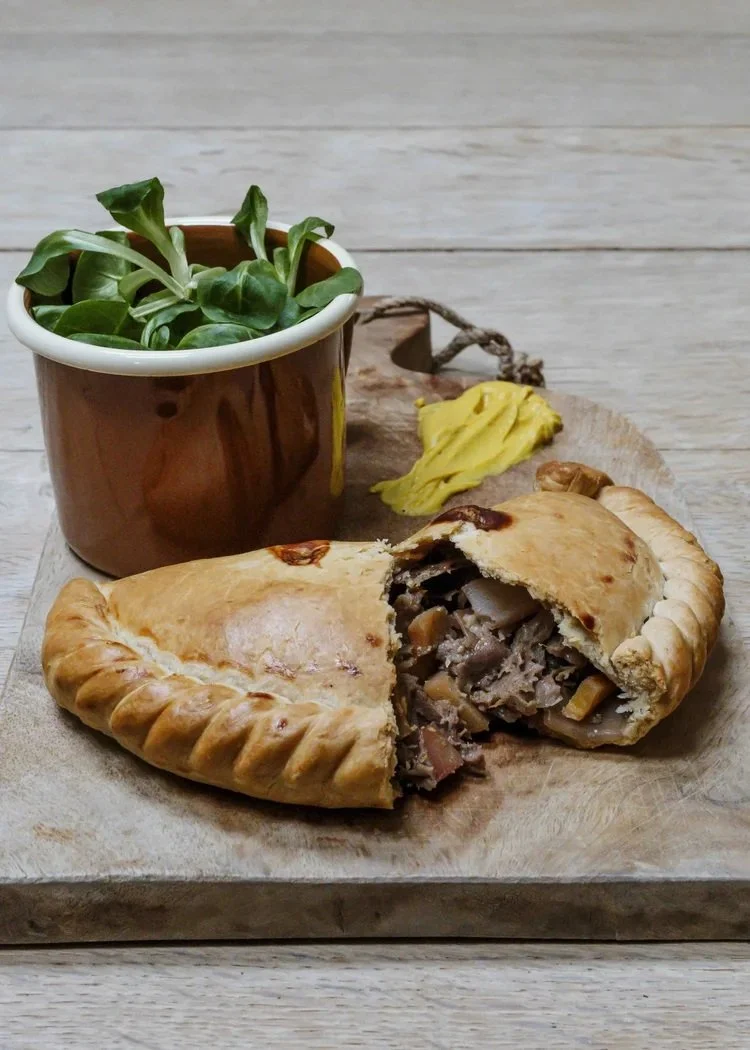
The pasty's exact birthplace is genuinely disputed by food historians, and honest ones will tell you there is no single neat origin story, but what is well documented is how a food that began on royal tables became inseparable from Cornwall specifically, a transformation covered in full below.
From Royal Table to Miner's Lunch
The pasty's origins are genuinely unclear, and historians are honest about that, but the documented references go back much further than the tin mines the pasty later became famous for. The word itself comes from medieval French, paste, for a pie filled with venison, salmon or other meat, vegetables or cheese, baked without a dish. Pasty type pies appear in literature as early as the 12th century, in Chrétien de Troyes' Arthurian romance Erec and Enide, and later in the 14th century Robin Hood tales and two plays by Shakespeare, according to the pasty's Wikipedia history.
Some of the earliest concrete records are remarkably specific. In 1208, King John granted a charter binding the town of Great Yarmouth to send the sheriffs of Norwich one hundred herrings baked into twenty four pasties every year, passed on to the king himself. Around the same period, 13th century chronicler Matthew Paris wrote that the monks of St Albans Abbey "according to their custom, lived upon pasties of flesh meat". In 1465, 5,500 venison pasties were served at the installation feast of George Neville, Archbishop of York. The pasty reached royalty directly too, a surviving letter from a baker to Henry VIII's third wife, Jane Seymour, hopes "this pasty reaches you in better condition than the last one". By the mid 1600s, diarist Samuel Pepys was recording his own pasty dinners, memorably one "damned venison pasty, that stunk like a devil".
The famous idea that miners ate a pasty by holding the thick crimped edge, then threw the crust away to avoid touching food with hands dirtied by tin dust and arsenic, is one popular explanation for the crimp, though old photographs also show pasties simply wrapped in paper or muslin and eaten end to end, described as "the true Cornish way" in the earliest known Cornish recipe book, published in 1929. Another tradition holds that pasties were marked with an initial at one end and eaten from the other, so an unfinished pasty could be reclaimed later by its owner.
Mine folklore ran alongside these practical habits. Miners associated the pasty with "knockers", spirits said to knock either to reveal rich veins of ore or to warn of a collapse, and would leave a small piece of crust behind in the tunnels to keep them on side. Sailors and fishermen held a similar superstition, discarding a crust for the spirits of dead mariners, though many believed it was bad luck to take a pasty aboard ship at all.
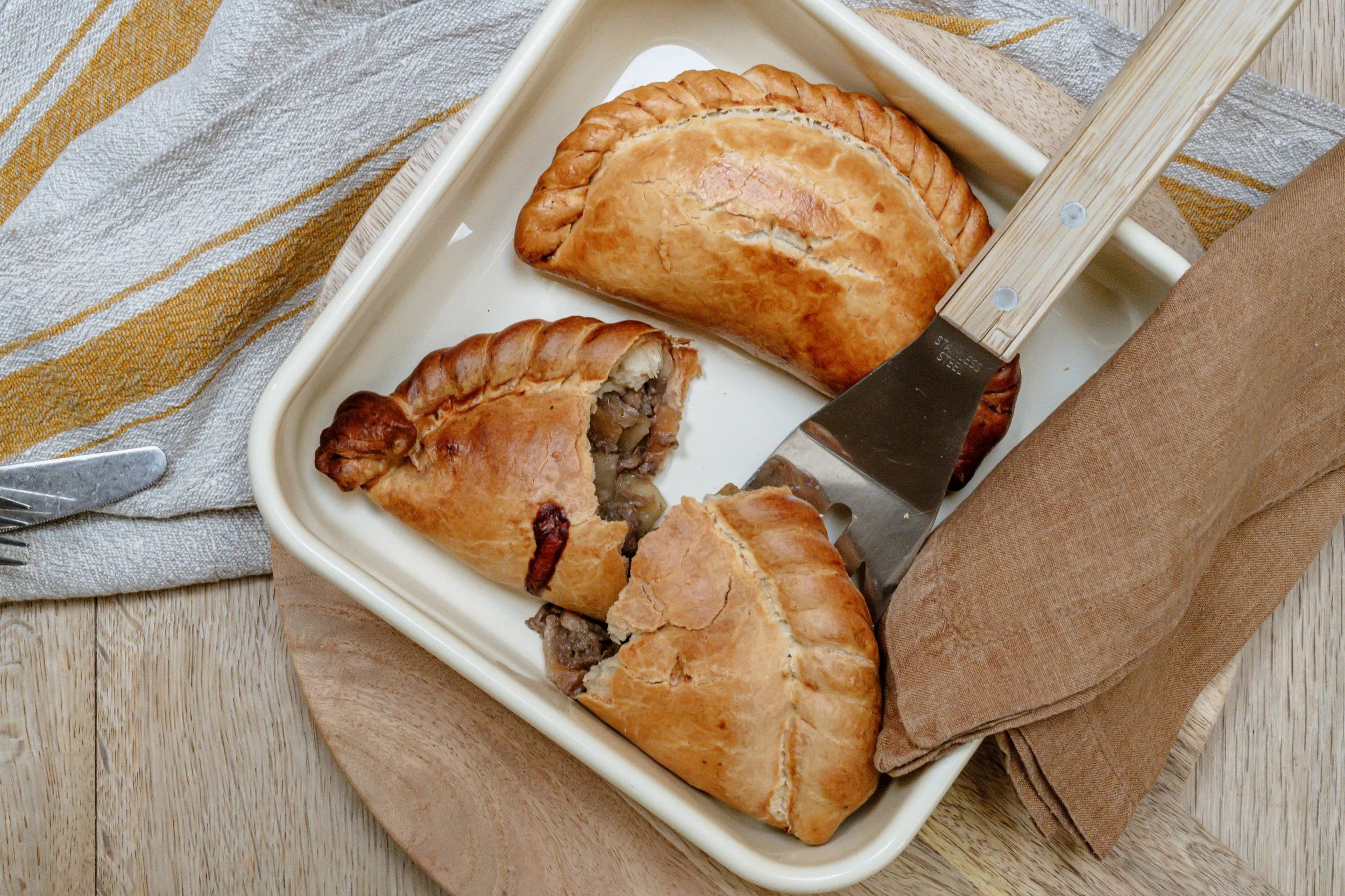
When "Cornish Pasty" Became a Named Dish
One of the earliest surviving descriptions of home pasty making appears in a New Zealand newspaper in 1843, describing Cornish cottagers baking pasties for men "working at a distance in the fields", noting simply that "the pasty can be carried in the man's pocket."
The specific phrase "Cornish pasty" is on record from at least the early 1860s. Writing in 1862, Henry H. Vivian described buying one at Bodmin to take home so his own cook could use it "as a pattern for Cornish pasties in quite another part of the country", and in 1861 James Orchard Halliwell recorded that "Cornish pasties are very popular with the working classes in this neighbourhood, and have lately been successfully introduced into some parts of Devonshire."
By the late 19th century the pasty had become firmly established as the dish most associated with Cornwall, a status it still holds today, now estimated to account for around 6 percent of the entire Cornish food economy.
The Cornish Pasty Around the World
As tin mining declined through the 19th century, Cornish and Devonian miners, sometimes known as Cousin Jacks and Cousin Jennies, carried their trade and their pasty traditions to new mining regions across the globe. The pasty took root wherever they settled, and distinct local pasty traditions survive in several countries today, according to the documented history of the pasty.
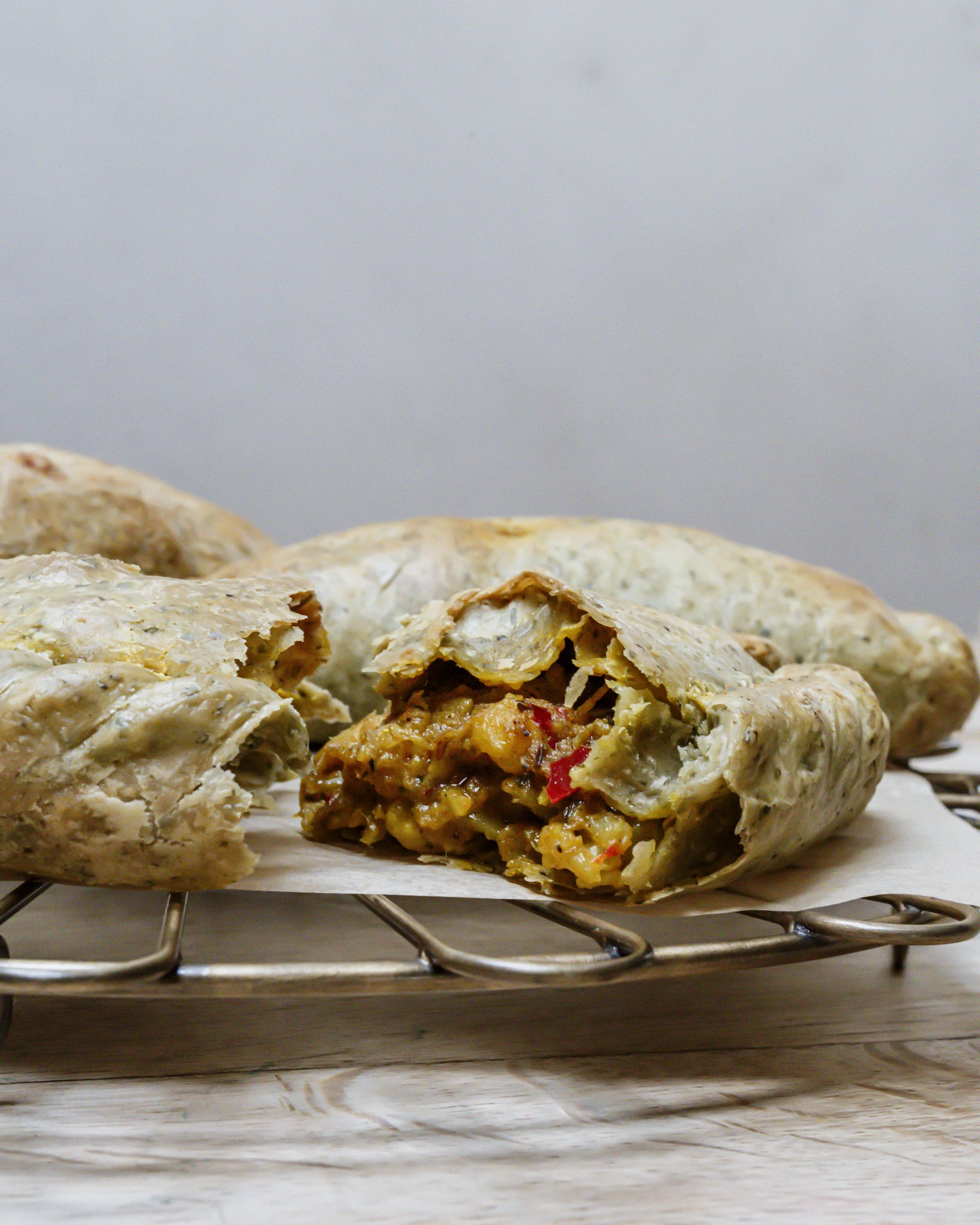
The United States, most famously Michigan's Upper Peninsula, where the pasty became a genuine cultural symbol of the Copper Country mining region and the village of Calumet still holds an annual Pasty Festival, alongside historic mining towns such as Grass Valley and Nevada City in California, Mineral Point in Wisconsin, and Butte, Montana
Mexico, in the state of Hidalgo and the twin silver mining towns of Pachuca and Real del Monte, where Cornish miners' legacy survives in the local paste, considered a genuine regional dish to this day, complete with its own pasty museum and an annual International Pasty Festival held each October in Real del Monte
Australia, particularly the Yorke Peninsula, home to an annual Cornish festival held since 1973 and said to be the largest of its kind in the world
South Africa, New Zealand and Ulster, each with their own smaller Cornish mining diaspora and pasty traditions
It is one of the more remarkable journeys any regional British food has made, carried not by trade but by the miners themselves, and it is this same protected recipe and method that Phat continues to make in Cornwall today.
What Actually Makes a Cornish Pasty
Under the PGI specification, a genuine Cornish pasty must meet a defined set of rules, not just look the part.
Made in Cornwall, under the same legal principle that ties Champagne to its region
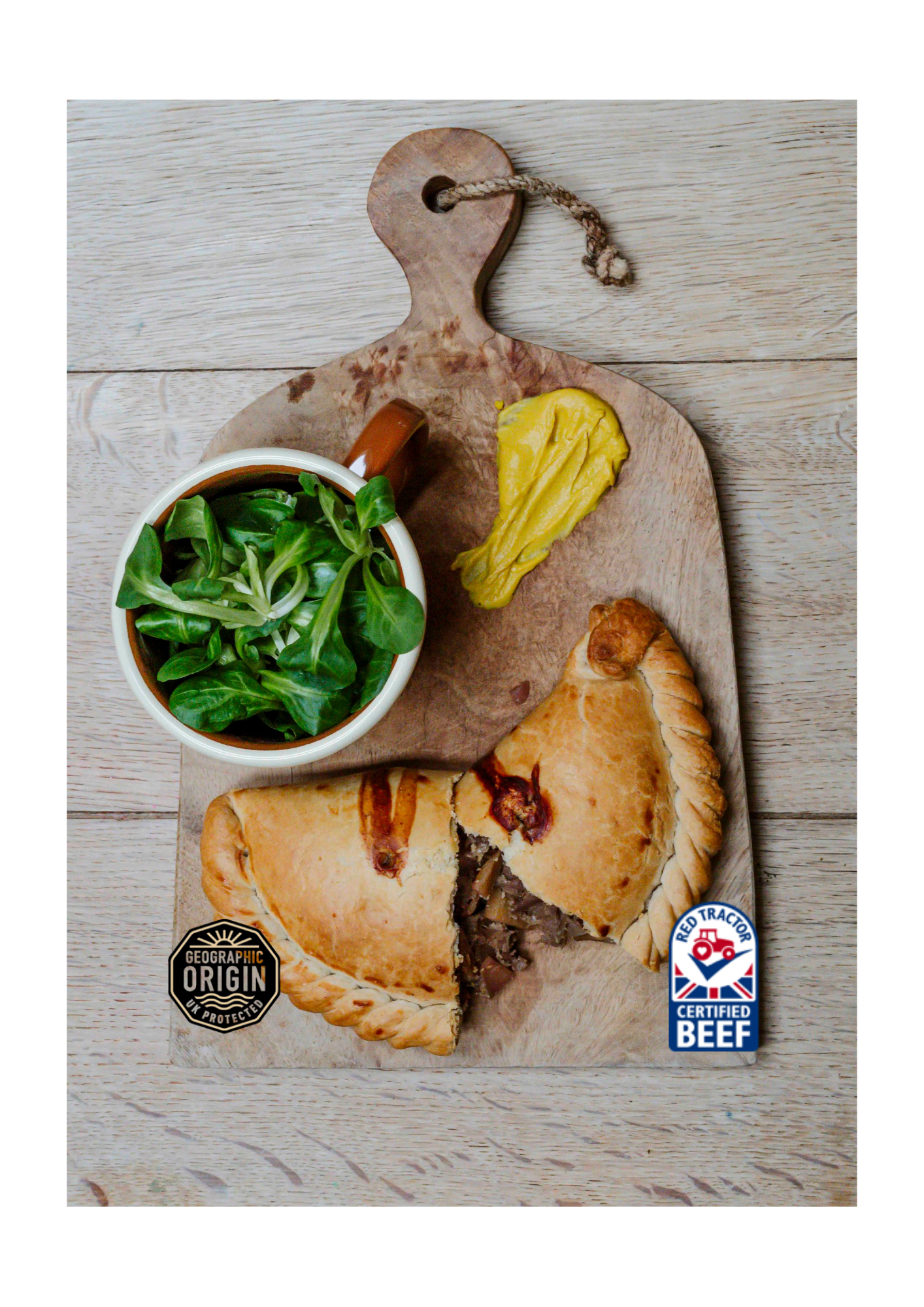
A distinctive D shape, crimped on one side, never on top
A filling of chunky, minimum 12.5 percent, diced or minced beef, swede, potato and onion, seasoned simply with salt and pepper
Raw ingredients assembled and baked together raw, not pre cooked and reassembled, so the meat and vegetables cook together inside the pastry
A robust, golden shortcrust or puff pastry able to withstand handling without splitting
A savoury flavour throughout, with none of the sweet or heavily spiced notes found in some regional imitators
The crimp itself deserves its own mention. Traditionally a minimum of twenty crimps by hand is considered the mark of a proper pasty maker, sealing in the raw filling so it steams and cooks inside its own pastry parcel during baking. It is a genuinely skilled piece of hand craft, not just decoration.
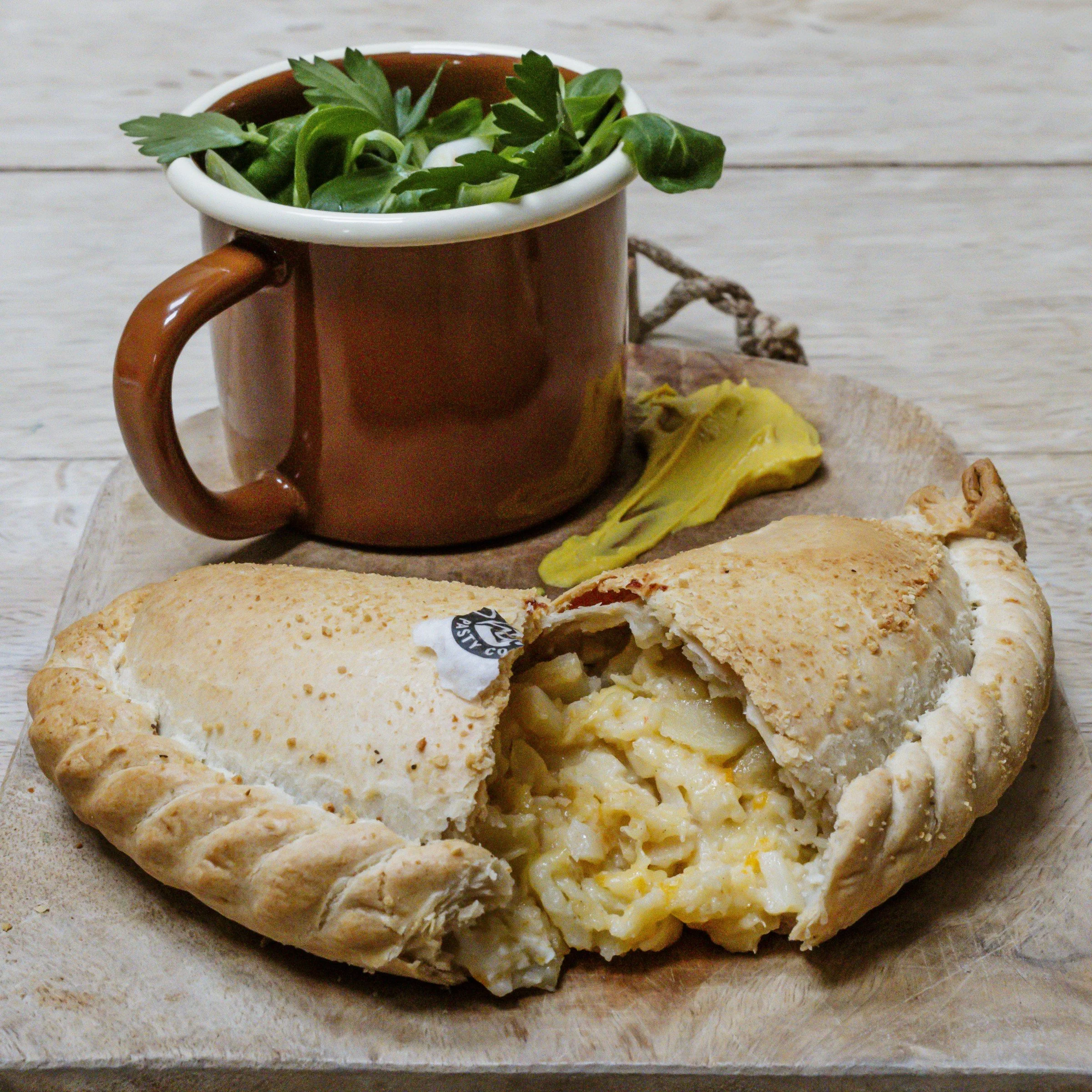
The Cornish Pasty in Numbers
PGI status granted
20 July 2011, by the European Commission
Cornish Pasty Association members (pasty makers)
Around 50 Cornwall based producers
Pasties made by CPA members (2008)
About 87 million, worth around £60 million in sales
Share of the Cornish food economy
Around 6 percent
Jobs supported (2011)
Over 1,800 permanent staff, plus around 13,000 jobs benefiting from the trade
Minimum meat content (UK regulation)
At least 12.75 percent of pastry weight, per the Meat Pie and Sausage Roll Regulations 1967
Source: Wikipedia, Pasty, citing Cornish Pasty Association figures.
Cornish Pasty Questions, Answered
-
Under PGI status, it must be made in Cornwall, shaped into a D shape and crimped on one side only, and filled with a minimum of 12.5 percent chunky beef, swede, potato and onion, seasoned simply with salt and pepper, assembled and baked raw.
-
2011, following a long campaign led by the Cornish Pasty Association, giving it the same legal protection as products like Champagne and Melton Mowbray pork pies.
-
The crimp began as a handle for tin miners, letting them hold and eat the pasty with hands dirty from ore and tin dust, without contaminating the filling.
-
Phat Pasty Co of Falmouth holds World Pasty Championship titles from the Eden Project, the inaugural Global Pasty Championships title at Heligan, multiple British Pie Award wins, consecutive Taste of the West Golds from 2020 to 2026, and is the only Cornish pasty company to hold B Corp accreditation.
-
Yes. Phat is a licensed member of the Cornish Pasty Association's PGI trademark scheme and holds Made in Cornwall accreditation, a trademark run by Cornwall Trading Standards in association with Shop Cornish, confirming its pasties are made in Cornwall under the protected recipe and method.
-
Phat uses British Red Tractor assured steak, a meat content above the 12.5 percent PGI minimum, locally sourced potatoes and swede, sliced onions for depth of flavour, and every pasty is hand crimped in traditional shortcrust pastry.
Further Reading and Sources
Pasty — Wikipedia — full documented history, literary references, PGI background and global diaspora
Cornish Pasty Association: History of the Pasty — trade body history and PGI standards
Cornish Pasty Association — PGI standards, trademark licensing and industry background
UK Protected Food Name Scheme — official PGI/PDO framework
Cornwall Council / Cornwall Trading Standards — Made in Cornwall trademark scheme
Shop Cornish — Made in Cornwall accreditation partner and Cornish producer marketplace
Order Phat Pasty Co pasty home delivery and pasties by post direct from phatpasty.com
Eden Project — host venue, World Pasty Championships
The Lost Gardens of Heligan — host venue, Global Pasty Championships
Channel 5, A Year by the Sea, Season 2 Episode 1 — add your My5 episode link here